Antimatter Dimensions Eternity Guide: From Infinity to Faster Runs
This Antimatter Dimensions Eternity Guide covers the part of the game that begins after Infinity: reaching Eternity, spending Eternity Points, choosing Time Studies, and building a repeatable early-Eternity loop.
The practical answer: Reach the Infinity milestone, make a clean save export, push to the Eternity threshold, then spend the first EP on the upgrades that shorten the next run. Buy the cheap Time Dimensions and useful Time Theorems, use a simple Time Study path, and repeat Eternity only when the next run is measurably faster. This Antimatter Dimensions Eternity Guide treats each reset as a testable loop rather than a fixed list of numbers.
The site's beginner guide stops at the early Infinity route, while the Eternity Challenges page is reserved for EC1-EC12. This Antimatter Dimensions Eternity Guide fills the middle: the first Eternity, the first few EP purchases, the study tree decisions that unlock a stable rhythm, and the point where farming becomes more valuable than forcing a difficult challenge. Labels, costs, and balance can change between Web, Steam, Android, and future builds, so confirm the live panel before committing a large reset.
On this page
The Short Antimatter Dimensions Eternity Guide Route
When you have just reached Infinity, the next goal is not to buy every visible upgrade. It is to create one clean baseline run, reach the Eternity requirement without damaging your best save, and use the first EP on a loop that improves both production and decision speed.
- Finish the Infinity setup and let autobuyers settle before you begin the final push.
- Export a backup and label it with the platform and milestone so a failed experiment can be reversed.
- Push to the live Eternity requirement, checking the Eternity panel rather than copying a historic threshold from an old guide.
- On the first Eternity, buy the lowest-cost permanent progress that improves the next run, then take the cheap Time Dimension or Time Study options that are actually available.
- Repeat a short Eternity only after you can explain what changed: more EP, a new milestone, a faster Infinity, or a stronger study path.
How to Reach and Prepare for Eternity
Eternity is the next major reset after Infinity. In this Antimatter Dimensions Eternity Guide, the exact requirement is displayed by the live game and may be represented as an antimatter threshold, so use the number in the current Eternity panel as the authority. The preparation work is more stable than the number: make the run reproducible, protect the save, and remove automation that would reset at the wrong time.
| Check | What it means | Action before the push |
|---|---|---|
| Infinity baseline | Your current Infinity loop should complete without manual rescue every cycle. | Run one normal Infinity and note the time, Infinity Points, and the upgrades that carried it. |
| Eternity panel | The current client shows the requirement and any state that blocks the reset. | Read the live text; do not substitute a value copied from an older wiki table. |
| Save protection | Eternity changes the reset layer and can expose a bad automation or study choice. | Export the save, keep the source untouched, and make a separate working copy for experiments. |
| Autobuyers | An Infinity or Dimension reset at the wrong moment can hide whether the route improved. | Use a predictable setting for the final push, then review it after Eternity. |
| Time Theorems | The first tree decisions are constrained by your available EP and the TT already earned. | Plan the first legal path, but leave room to respec when the next milestone changes the best route. |
If the threshold feels unreachable, do not immediately edit the save or buy random upgrades. Check whether the slow point is antimatter production, Infinity frequency, galaxies, Replicanti, or a disabled autobuyer. A single bottleneck gives you a useful next action; a general feeling that the game is slow does not.
What to Spend Antimatter Dimensions Eternity Points On First
Eternity Points are both a reward and a planning constraint. This Antimatter Dimensions Eternity Guide uses the first purchase to make the next run easier to read and faster to repeat. Do not judge an upgrade by its largest tooltip number alone: a small permanent multiplier or a new Time Dimension can be better than a dramatic effect that you cannot use for several resets.
Buy repeatable value
Prefer an upgrade that helps every ordinary Eternity or Infinity instead of a narrow effect for one future challenge. Repeatability is what turns the first EP into a snowball.
Unlock the next layer
A Time Dimension, milestone, or study access point can be worth more than a percentage because it changes what the next run is allowed to do.
Keep a small reserve
Do not spend every point before checking the next visible requirement. A reserve can prevent a second slow run when a cheap prerequisite appears.
Record the result
After buying, run the same route once and compare the time or output. If nothing measurable improved, the purchase was not the current bottleneck.
| Stage | Buy or test | Why it helps |
|---|---|---|
| First EP | The cheapest broadly useful Eternity upgrade or Time Dimension shown by the live panel. | It creates an immediate comparison point and usually improves the next return to Infinity. |
| Early EP | Cheap Time Theorems that open a coherent tree path, while keeping enough EP for a required node. | A legal, connected tree is more useful than scattered purchases that do not unlock a route. |
| Growing EP | A permanent multiplier or milestone that improves repeated farming, then the next route enabler. | Broad gains compound while you are still repeating short Eternities. |
| Before a challenge | Only the upgrades that support the next known challenge or Celestial requirement. | Narrow value is worth paying for when it has a defined target, not when it is merely available. |
The exact order will differ between saves because achievements, Infinity Challenge completions, and earlier purchases change the baseline. The reliable method is to write down the next milestone, name the system delaying it, and buy the least expensive option that changes that system. If an upgrade has no clear connection to the next milestone, defer it.
Time Studies and the First Repeatable Eternities
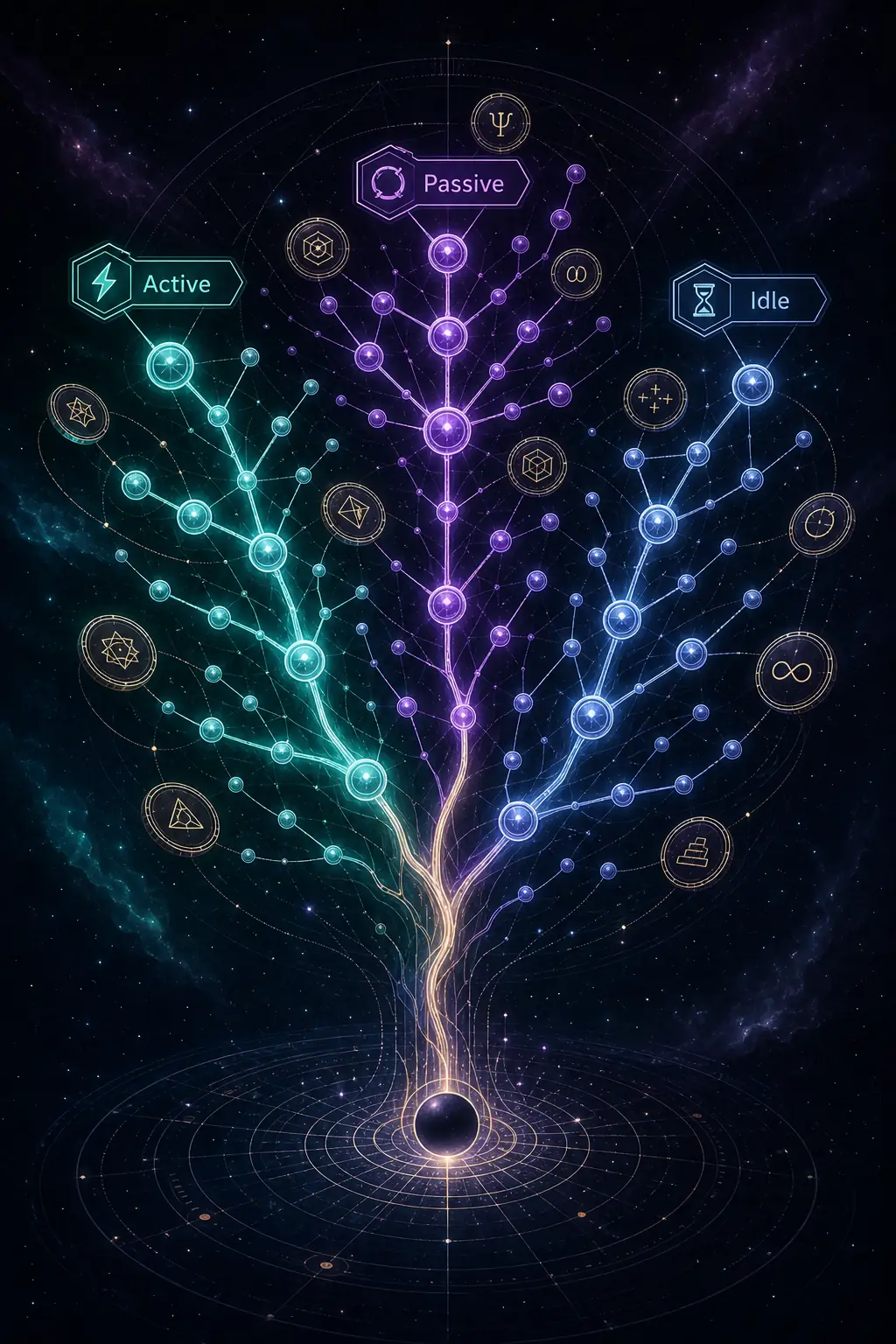
Time Studies are the main route decision in early Eternity. This Antimatter Dimensions Eternity Guide treats the tree as a set of connected choices: a study that looks powerful in isolation can be weak when it consumes the Theorems needed for a more useful path. Start with a connected route that supports your current producer, then change one branch at a time so you can tell which choice helped.
- List the next milestone and the resource it needs: faster Infinity, more Eternity Points, Time Shards, or a challenge entry condition.
- Choose one primary dimension path instead of spreading a small TT budget across every color and branch.
- Buy prerequisite studies in order and stop before a tempting side node if it blocks the next route enabler.
- Run one complete Eternity with the new tree, then compare the result with the saved baseline.
- Respec only after exporting; rebuild the tree around the next milestone rather than trying to preserve a failing route.
| Situation | Study decision | Why |
|---|---|---|
| You need a faster ordinary run | Use the branch that improves your strongest producer and shortens the reset loop. | A route that compounds every run usually beats a one-time burst. |
| You need Time Shards | Favor the Time Dimension path when its production is the active bottleneck. | Free tickspeed and a healthy shard flow can shorten several layers at once. |
| A study opens a challenge | Buy the unlock node, export, then respec for the challenge mechanic if needed. | The tree that opens a challenge is not always the tree that clears it. |
| The run stalls after a purchase | Undo the last branch change and compare one variable at a time. | Small budgets make it easy to mistake a lost prerequisite or automation setting for a weak study. |
Do not copy a historic sequence of study numbers as if it were universal. Community routes are useful examples, but later balance changes and different achievement states can move the best breakpoint. The key habit is to keep the path explainable: you should be able to say which study improves the next repeatable action.
Open the detailed Time Studies guide for branch choices and Time Theorem priorities.
Build the Early Eternity Farming Loop
The first few Eternities are not a race to the largest number. This Antimatter Dimensions Eternity Guide treats them as a calibration period. Each loop should tell you whether EP spending, Time Studies, milestones, and automation are reducing the work required to reach the same target. When a run gets faster, keep the route stable long enough to earn the next unlock before changing it again.
| Milestone signal | What it tells you | Next action |
|---|---|---|
| First Eternity completes | You have a new reset layer but the next run still feels manual. | Buy the first useful EP option, configure predictable autobuyers, and repeat once before optimizing. |
| Second or third run is faster | The tree and purchases are supporting a real loop. | Keep the route, buy the next broadly useful milestone, and save a fresh export. |
| EP growth slows | The current target may be gated by Time Shards, Infinity speed, or a missing study. | Name the bottleneck and farm the layer that feeds it instead of resetting more often without a plan. |
| A challenge becomes available | The route can now branch into a specialized test. | Read the entry condition, export, and link to the dedicated challenge guide only when you are ready to attempt it. |
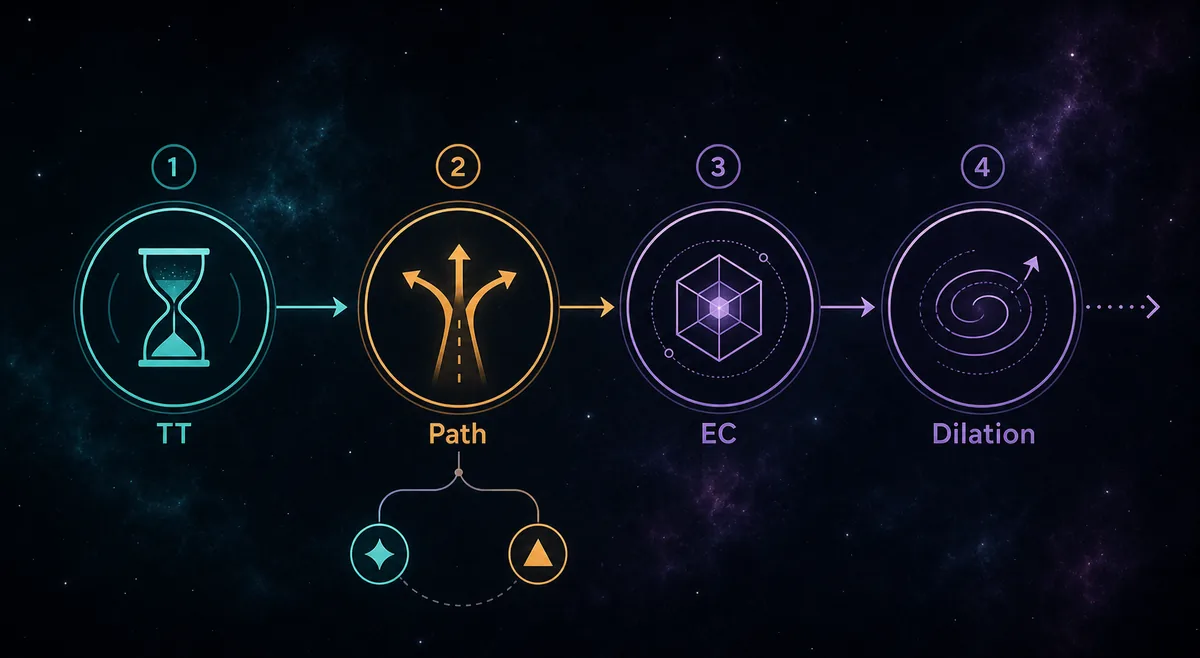
| Time Dilation is visible | Early Eternity farming has done its job and the next phase is a new resource loop. | Keep the stable backup, then transition with a clear requirement checklist. |
A good farming loop has a baseline, a single change, and a measured result. Use the same notation and platform for both comparisons. If you switch from Web to Steam or Android, treat it as a new baseline because storage, timing, and interface defaults may differ. Do not use a save editor to manufacture a milestone; use it only to inspect or protect a legitimate save.
Why Eternity Progress Feels Stuck
A slow Eternity can come from a missing upgrade, a wrong study path, an automation rule, or a threshold that is simply too ambitious for the current save. This Antimatter Dimensions Eternity Guide recommends diagnosing the symptom before changing the tree. The goal is to remove one cause and keep the rest of the route stable.
The final push barely moves
Check galaxies, Replicanti, Infinity frequency, and whether a required autobuyer is disabled. If the same layer is slow in every test, farm its prerequisite rather than forcing Eternity.
The new tree is weaker
Confirm every prerequisite, the active dimension path, and any reset setting that changed with the respec. Restore the exported baseline before trying a second change.
EP rises but the run does not
A point can be spent on a narrow effect that does not touch your bottleneck. Compare the next milestone and defer purchases that have no immediate route connection.
The challenge button is available
Unlocking a challenge is not the same as being ready to clear it. Keep the Eternity loop, study the restriction, and use the dedicated EC page when the entry plan is clear.
- Export the current save and keep the file untouched.
- Record one observable symptom, such as a long Infinity, missing Time Shards, or a reset that triggers too soon.
- Change one input: a study branch, an autobuyer threshold, or the farming target.
- Run the same test again and keep the change only if the measured result improves.
- If nothing changes, restore the backup and farm the prerequisite instead of stacking more random edits.
Old walkthroughs often use exact seconds or purchase counts that no longer match the current build. Treat those numbers as a clue about the intended phase, not a promise. The live game panel and your own before-and-after test are stronger evidence for the save in front of you.
From Early Eternity to Time Dilation
After the first stable Eternity loop, this Antimatter Dimensions Eternity Guide hands off to a route through more studies, Eternity Challenges, and later Reality systems. You do not need to rush every challenge. A strong next phase has a saved farming route, a clear requirement, and a reason that the reward will improve future runs.
- Keep the best early-Eternity export and note the study path that produced it.
- Complete easy challenge milestones when the entry condition is clear, but do not sacrifice a stable farm for a marginal first attempt.
- Use the dedicated Eternity Challenges guide for EC1-EC12 mechanics; this page remains the general Eternity route.
- When Time Dilation or Reality requirements appear, move to the matching specialist guide instead of copying a pre-Eternity purchase order.
- Recheck the live client after an update because labels, costs, and platform behavior can change.
The useful handoff is not a perfect universal build. It is a save you can explain and recover: one clean export, one known farming loop, and one next milestone. That makes later Celestial, Glyph, and Reality decisions much easier to test.
Sources and Version Notes
Community guides are useful for vocabulary and route ideas, but exact costs and timing are version-sensitive. These references were checked while preparing this article; use the live client for the final value.
- Community wiki: Eternity for the current reset-layer terminology and related links.
- Early Eternity guide (Android) as a comparison point for EP, Time Dimensions, and early milestones.
- Gamezebo basics guide for the broader pre-Eternity progression context.
Antimatter Dimensions Eternity FAQ
What should I do after my first Eternity?
Export the save, buy the cheapest broadly useful EP option, choose a connected Time Study path, and run the same route once more. Keep the change only when the next Eternity or Infinity is measurably faster.
How many EP should I save before buying anything?
There is no universal reserve because costs and unlocks depend on the build and save. Keep enough for the next visible prerequisite, then spend the remainder on an effect that changes your current bottleneck.
Should I copy an old Time Study order?
Use an old order as a starting idea, not a fixed script. Confirm the live costs, your available Time Theorems, and the producer your next milestone actually needs. Respec after a backup if the route stalls.
Why can I see Eternity Challenges before I can beat them?
The unlock condition only proves that the challenge is available. A clear may need a different study tree, more EP, more Time Theorems, or automation changes. Keep farming and use the challenge-specific guide when the entry plan is ready.
Is the Eternity threshold the same on Web, Steam, and Android?
Do not assume it is identical. Platform builds and balance updates can change labels, timing, or available actions. Read the current panel and record the platform with your save backup.
Can I use the Save Editor to get through Eternity?
Use a save editor for inspection and backup, not to invent milestones or challenge states. Direct edits can create inconsistent data, so preserve a clean export before any experiment.
When should I stop farming early Eternities?
Stop treating the loop as the main goal when a clear Time Dilation, Eternity Challenge, or Reality requirement is the next meaningful unlock. Keep the fastest stable export, then move to the specialist guide for that system.
Bottom line: A good Antimatter Dimensions Eternity Guide gives you a repeatable decision process: protect the save, reach the live threshold, spend EP on the current bottleneck, choose a coherent Time Study path, measure the next run, and move to the next layer only when the loop is stable.