Antimatter Dimensions Time Studies Guide: Best Paths and Time Theorem Priorities
Time Studies are the point where Antimatter Dimensions becomes a route-planning game. This guide explains how to spend Time Theorems, when to pick Active, Passive, or Idle paths, and how to respec before Eternity Challenges and Time Dilation.
Short answer: buy Time Studies that match your current goal instead of treating the tree as a permanent build. Use production studies while farming EP and Time Theorems, switch paths when an Eternity Challenge demands it, and do not be afraid to respec once the next unlock is more valuable than your current route.
Most search results for Time Studies are wiki tables, old forum notes, or full-game walkthroughs that bury the decision. This page is narrower: it helps Eternity-stage players understand the study tree as a set of priorities so they can move from first Time Studies through EC cleanup and into Time Dilation without wasting long runs.
Quick Navigation
The Best Overall Rule for Time Studies
Your best Time Study path is the one that makes the next milestone faster. Early in Eternity, that usually means raw production and faster EP farming. When you unlock Eternity Challenges, the best path changes because requirements, disabled mechanics, and challenge goals matter more than normal farming speed. Before Dilation, the priority shifts again toward collecting enough Time Theorems and completing the EC rewards that make the Dilation push realistic.
Practical rule
If a setup stops moving for more than a few minutes, export a save, respec, and test the path that matches the current wall. Waiting longer is often worse than rebuilding the tree.
How Time Theorems Should Guide Your Route
Time Theorems are not just a currency to spend from top to bottom. They decide which branches you can afford, whether an EC unlock is worth buying now, and whether you should keep farming before committing to a restrictive route. Spend them around the next bottleneck, then rebuild when the bottleneck changes.
| Source or use | Best use | Common warning |
|---|---|---|
| Antimatter and Infinity Point TT | Buy early studies and unlock the first useful branches as soon as they produce clear EP gains. | Do not drain all resources if a small farm run would buy a better branch immediately after. |
| Eternity Point TT | Fund stronger mid-tree choices and prepare for EC unlock studies. | If a purchase only gives a tiny speedup, compare it with saving for the next EC or path split. |
| Challenge unlock studies | Buy them when the entry requirement and your production both look realistic. | Unlocking an EC does not mean your current tree can beat it; respec before entering if needed. |
| Dilation preparation | Treat final TT spending as a checklist for EC rewards and required studies before the Dilation push. | Entering Dilation underprepared can feel like a hard reset instead of a planned milestone. |
Active, Passive, or Idle: Which Study Path Should You Pick?
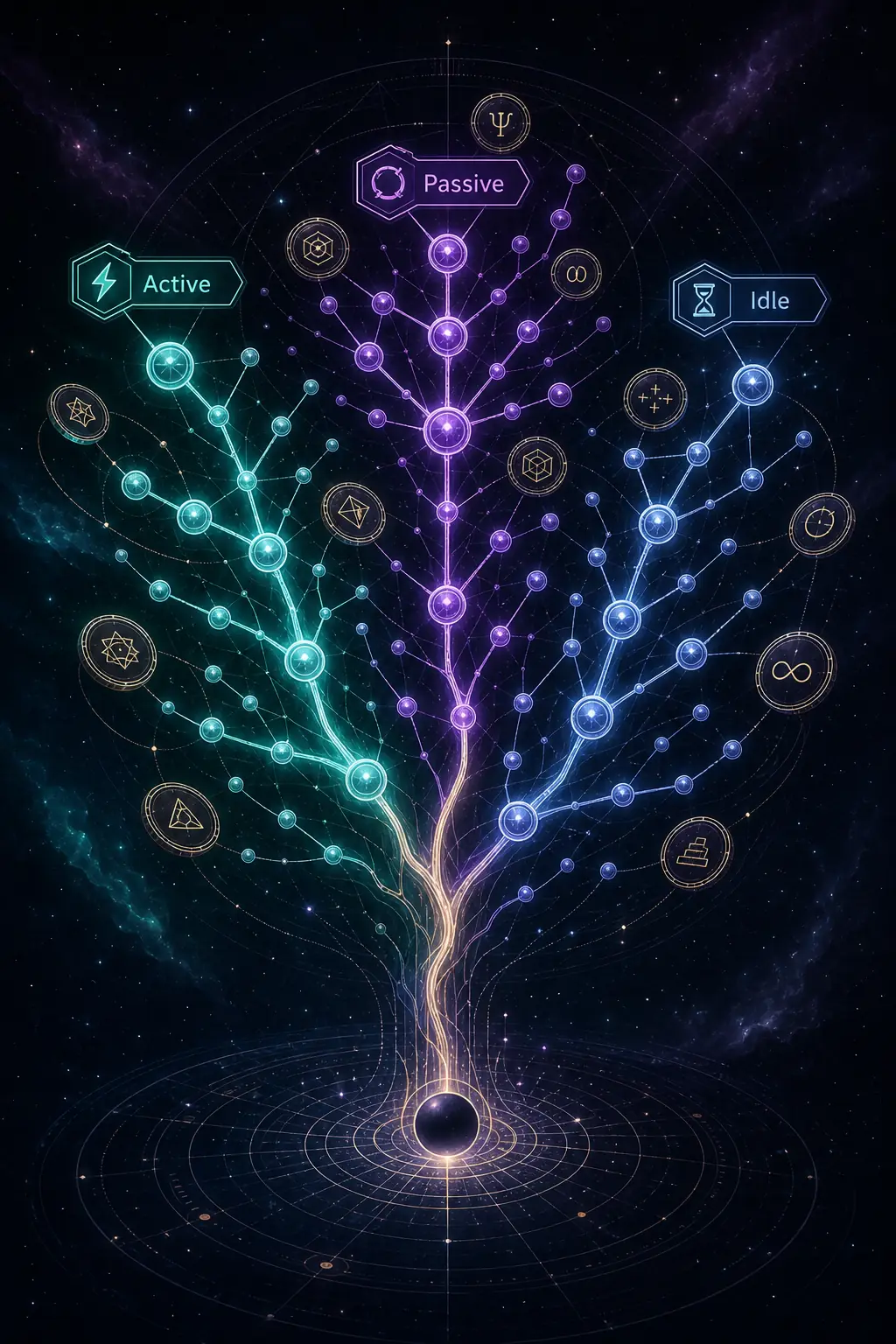
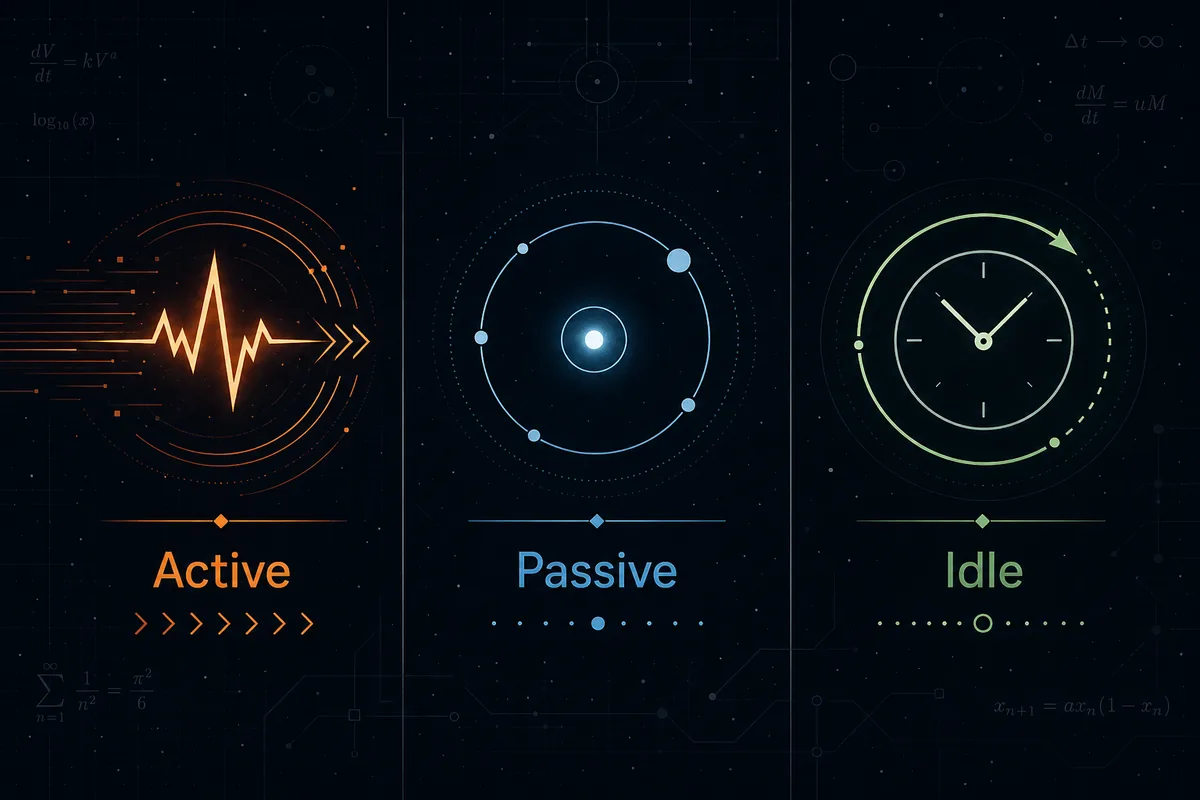
The three named paths are less about personality and more about how often you can interact with the run. Active paths reward frequent attention and can be best when you are pushing manually. Passive paths smooth out production when you check in occasionally. Idle paths are useful when a run needs time, but they can be weaker if you keep watching and resetting too early.
| Path | Best for | Caution |
|---|---|---|
| Active | Manual pushes, frequent checks, and moments where fast decisions beat waiting. | Weak if you leave the game alone for long stretches or forget to adjust automation. |
| Passive | Stable EP farming and medium-attention runs where you want fewer sharp timing demands. | May not win specialized ECs if a challenge rewards a different production source. |
| Idle | Longer unattended runs and situations where time-based bonuses have room to grow. | Do not choose Idle just because it sounds safe; many walls require active respec testing. |
When to Respec the Time Study Tree
Respec is a normal part of Eternity strategy. A tree that was perfect for EP farming can be wrong for an EC, and a tree that unlocked an EC can still be wrong for beating it. The safest workflow is to export before major experiments, rebuild around one target, and keep notes on what actually moved the run forward.
- Respec before entering an Eternity Challenge if the unlock route forced you through a weak path.
- Respec after a new EC reward changes which production source carries the next run.
- Respec when a study purchase leaves you short of the branch that would solve the real bottleneck.
- Respec before Dilation attempts so the run is built around the final requirement instead of normal farming comfort.
- Use a clean save export before large experiments; a backup is faster than repairing a confused automation setup.
Time Studies for Eternity Challenges and Dilation Prep
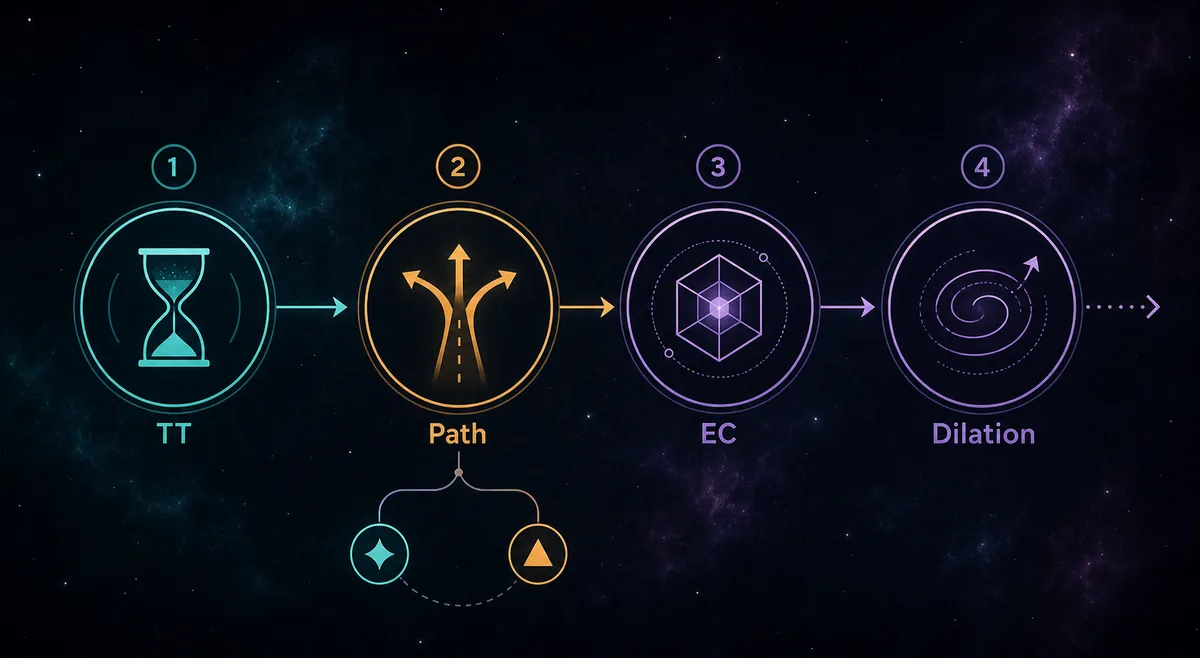
Eternity Challenges are the main reason Time Studies cannot be one fixed build. Some ECs restrict dimensions, some punish normal reset habits, and late ECs care heavily about path requirements. Your Time Study plan should therefore move in phases rather than trying to buy every attractive node immediately.
| Phase | Priority | Reason |
|---|---|---|
| Early Eternity | Build enough production to farm EP and basic TT quickly. | A bigger TT pool makes every later route less fragile. |
| First EC attempts | Unlock one realistic EC at a time, then respec for the actual challenge mechanic. | The entry study is not always the best completion tree. |
| EC cleanup | Alternate between farming, reward collection, and harder completions. | Later completions are usually efficient after earlier rewards snowball. |
| Pre-Dilation | Check missing EC rewards, TT requirements, and whether your path supports the final push. | Dilation is much smoother when it follows a planned cleanup, not a desperate attempt. |
Common Time Study Mistakes
Most Time Study walls are decision problems rather than permanent progress blocks. Check these mistakes before assuming you need to wait overnight.
| Mistake | Fix |
|---|---|
| Buying studies in a straight line because they are available. | Decide the next milestone first, then spend TT only if the study helps that milestone. |
| Keeping the same tree for farming and EC attempts. | Use one tree to farm and another tree to solve the challenge. |
| Ignoring Active, Passive, and Idle behavior. | Choose the path that matches how often you will check the run. |
| Trying Dilation before EC rewards and TT are ready. | Return to EC cleanup and TT farming before forcing a slow Dilation attempt. |
Useful Internal and External Resources
Use these pages when a study choice depends on the broader stage of your save:
- Antimatter Dimensions beginner guide for the wider Infinity to Eternity route.
- Eternity Challenge guide when a study route is being chosen for EC completions.
- Infinity Challenges guide if earlier challenge rewards still affect your pace.
- Save editor and backup guide before risky respec or automation experiments.
- Community wiki Time Studies page for current node names, costs, and formulas.
FAQ
Bottom line: Time Studies are a flexible routing system. Farm enough TT, choose the path that fits the next wall, respec for EC mechanics, and approach Dilation only after the study tree and challenge rewards are ready.